

The Resume You Don’t Share – But Build
 SFG•
SFG•
Strategies to help your employees adapt and thrive in the face of change. Providing continuous learning opportunities, promoting a growth mindset, and offering support resources.
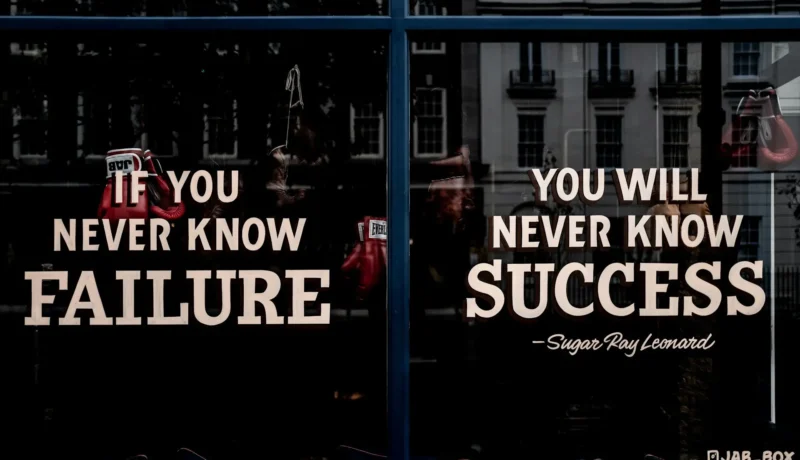
We all have two CVs: one of Success, and one of Failure.
We all have our résumés—polished and perfected. They’ve been rewritten countless times, with each new role or accomplishment carefully inserted. They showcase a curated version of our careers: the upward climb, the titles earned, the results delivered. These documents are designed to impress, to tell the world, “Here’s what I’ve achieved.”
But what if we had to submit a second résumé? One that wasn’t about accolades and accomplishments, but about everything that didn’t go as planned.
What would a CV of failures look like?
Would it include the jobs we didn’t get? The businesses that never took off? The ideas that fizzled out? The promotions that passed us by? Most people avoid those stories, choosing instead to focus on their upward trajectory. We’re trained to lead with our best, and often, that means hiding the bumps and bruises along the way.
Yet I’ve come to believe that this second CV—the one filled with detours, dead ends, and difficult lessons—is just as valuable as the first. It may be the one that matters more.
Years ago, I kept a folder filled with rejection letters. This was back when those letters came in the mail. Some were templated, some were surprisingly personal. I held on to all of them, not as reminders of failure, but as fuel. I’d pull them out from time to time and read through them, telling myself that someday, I’d prove them wrong. Over time, I did—but it wasn’t despite those rejections. It was because of them.
Success, after all, is a recipe made up of many ingredients. And some of them don’t taste as we had planned. But if you skip those parts—the setbacks, the mistakes, the moments of doubt—you miss out on the real flavor of the journey. Growth doesn’t happen during the easy wins. It occurs in the silent, messy moments in between.
Recently, I’ve had several conversations with friends who once held senior roles, overseeing teams and driving major initiatives, only to be laid off or downsized without warning. For some, it was like losing their identity. Without the title, the business card, the LinkedIn headline… who were they?
That question—“Who am I now?”—is a hard one. But it’s also a doorway—a chance to rethink, restart, rebuild. And in many cases, that forced reset led to something new, something better.
Which brings me to something I believe we don’t talk about enough—especially when it comes to preparing the next generation. Too often, our educational institutions present careers as a straight line. You intern, you get promoted, you climb. The narrative is neat and optimistic. But real life? It’s anything but neat.
Careers are not ladders. They are winding paths. They zig. They zag. They stall. They accelerate unexpectedly. And sometimes, they stop entirely, only to restart in a completely different direction.
Some of the most meaningful chapters in my career didn’t start with opportunity. They started with failure. With the closing of one door, and not knowing when the next one would open. With sleepless nights, financial stress, and the nagging fear that maybe I had taken a wrong turn.
But looking back, I wouldn’t trade those chapters for anything. Because that’s where I learned resilience. That’s where I learned reinvention. That’s where I learned to lead—not from a place of confidence, but from a place of humility.
And if we’re honest, we all have those stories. That one role we weren’t ready for. That risk we took that didn’t pan out. That business idea that ran out of money before it gained traction. These are the unseen moments that shape us.
So the question becomes: Are we brave enough to embrace them? Are we willing to love our second CV—the one filled with lessons instead of accolades?
Because here’s what I’ve found: The “safe” path is often the most dangerous one. It may look stable, but it rarely teaches us what we need to know. The bold steps, the failed attempts, the hard pivots—that’s where the richness lies. That’s where the stories worth telling come from.
I want especially to say this to those just starting in their careers: Where you begin does not define where you’ll end up. You don’t have to have a perfect plan. You don’t need to climb a perfect ladder. You just need to keep moving, keep learning, and keep showing up—even when the path doesn’t look like what you imagined.
If you fast-forward twenty years and look back, you may be surprised at the number of turns, stops, and detours you took. But you’ll also be amazed at how it all worked together to shape the person you became.
So, yes—take pride in your polished résumé. Keep it current. Keep it sharp. But don’t forget to honor your second one because that’s the one that built your grit. That’s the one that taught you empathy. That’s the one that brought you closer to who you really are.
And when you speak to someone younger, someone still finding their way, don’t just share the polished version.
Share the whole story. The second CV. Because in the end, that’s the one that truly connects us.
Click here for more articles with Ron Thomas
Related Posts




Comments are closed.
Etiam sit amet risus nec ipsum consectetur vulputate. Nunc mattis scelerisque leo, iaculis posuere velit maximus nec. Morbi congue eu mauris in tempor. Nulla quis egestas sapien. Morbi egestas neque sed ante eleifend, et mollis lorem sodales. Quisque posuere libero porta est dapibus, eget tincidunt lectus ultrices. Aliquam fermentum dolor libero, in pellentesque felis ullamcorper in. Morbi id feugiat dui, sed lacinia odio. Etiam varius feugiat ex, quis venenatis elit vulputate ac. Etiam vitae justo pretium, finibus elit at, venenatis augue.
Lorem ipsum dolor sit amet, consectetur adipiscing elit. Etiam velit odio, vulputate eu luctus id, ultricies sit amet leo. Donec suscipit elit nisl, nec rhoncus justo sollicitudin vel. Integer consequat ligula eget lacus pulvinar, nec rutrum lorem efficitur. Donec nec tincidunt enim, in efficitur elit.